
Wild Rose
Not many people can claim to have a verb named after them. We meet Jenny Barnes – aka @niff_barnes on Instagram – among the roses of her godmother’s garden to find out how the art of ‘niffing’ came about.
Words by Molly Haynes

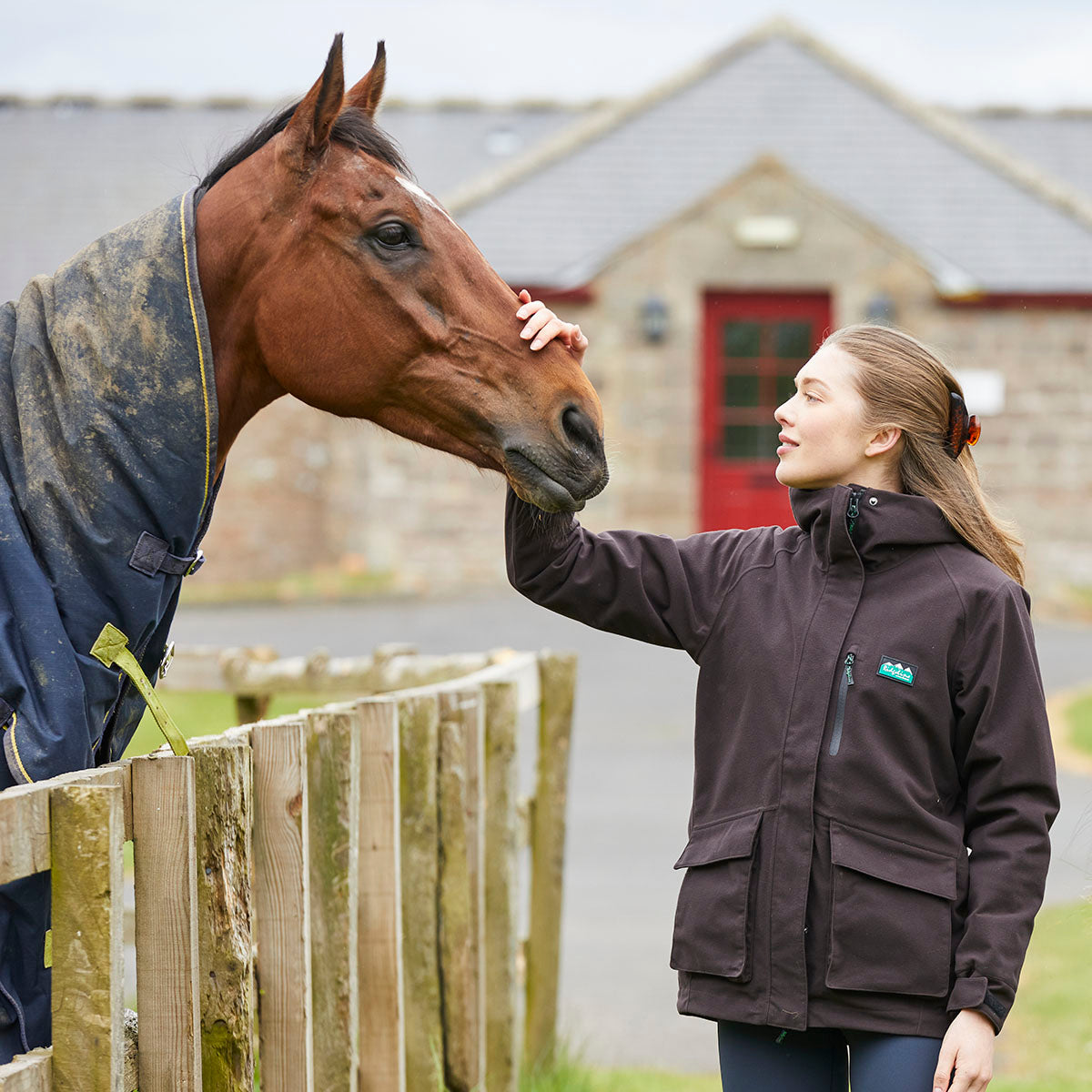
(Above) Jenny wears her Ridgeline Women's Monsoon Classic Smock in Teak.
“The only reason my Instagram handle is @niff_barnes is because Jenny Barnes was taken,” explains Jenny as we settle in for a chat beside the roses.
Not knowing what to choose instead, she sought inspiration from the childhood nickname her brothers called her – “Sniff, because, well boys…” – and went for Niff instead. Fast forward to now and if you’re not niffing your roses, you’re probably not a big enough rose fan. “It amazes me that so many people use it as a verb,” says Jenny. “People joke that one day it might end up in the dictionary.”
Quitting the rat race
Jenny wasn’t always destined to be a rose expert and gardener and says her career so far has been more than a little unconventional. “I grew up on a farm, and was always quite outdoorsy and practical. I did a degree in forensic science and then worked for National Grid for three years trading gas from an office where you couldn’t even open the windows,” she recalls.
“I remember watching the contractors mowing the grass outside and thinking, ‘I’d rather be doing that.’ And then one day, I decided to start doing that, so I retrained online while still doing my job and applied for a gardening apprenticeship.”
Jenny’s first one took her to Kent, working in the grounds of a privately owned castle. Working her way up from the bottom, she eventually landed at Asthall Manor, in Oxfordshire.
The art of rose pruning
There, head gardener Mark Edwards introduced her to his sculptural rose-pruning technique – a way of working that produces both structure and masses of flowers.
“He literally showed me in five minutes,” says Jenny. “I remember my first prune using this technique was on a rose called New Dawn. Mark told me I’d left too much in, which is funny because his technique often involved leaving the odd tendril or flowering branch loose. But from that point on I found my own style, reducing everything I do to make it as clean as possible.”
Jenny honed her technique while working as head gardener at a host of remarkable gardens including Daylesford in Oxfordshire, and Cottesbrooke Hall & Gardens in Northamptonshire.
For her, the starting point is always stripping all the leaves off the roses and pruning them right back to the bare bones before training them along walls, through trees, or creating sculptures or shapes out of the stems.
“What I think makes my work unusual is that most of my rose creations are self-supporting,” she explains. “But you must listen to the roses. Every stem will tell you what it wants,” she says. “If you try to force it, it’ll either die off or won’t flower well, as it’ll be stressed.”

Craft in demand
Right now, Jenny divides her time between working for a country house and teaching the ‘Art of Niffing’ around the country. Her work is also in demand with a host of private clients.
Laughing, she recounts one of her more challenging jobs. “It was a huge 40-foot rambler that had pulled the tree it was growing in down. I had two days, and I still have no idea how I did it. I was working into the night with a head torch on to get it finished, and I didn’t get to see it in daylight before I left.
“The client sent me pictures the next day, and it was amazing – I’d taken it from a huge mess lying on the lawn to what looked like a sculptural wave, which was apt as the garden was by the sea. I’m waiting for her to send photos of it when it’s in bloom.”
Her ‘Art of Niffing’ classes, hosted around the country, are also in demand, but Jenny explains that while she can teach them the art of niffing, no niff ends up the same, and everyone puts their own stamp on it.
Kit influencer
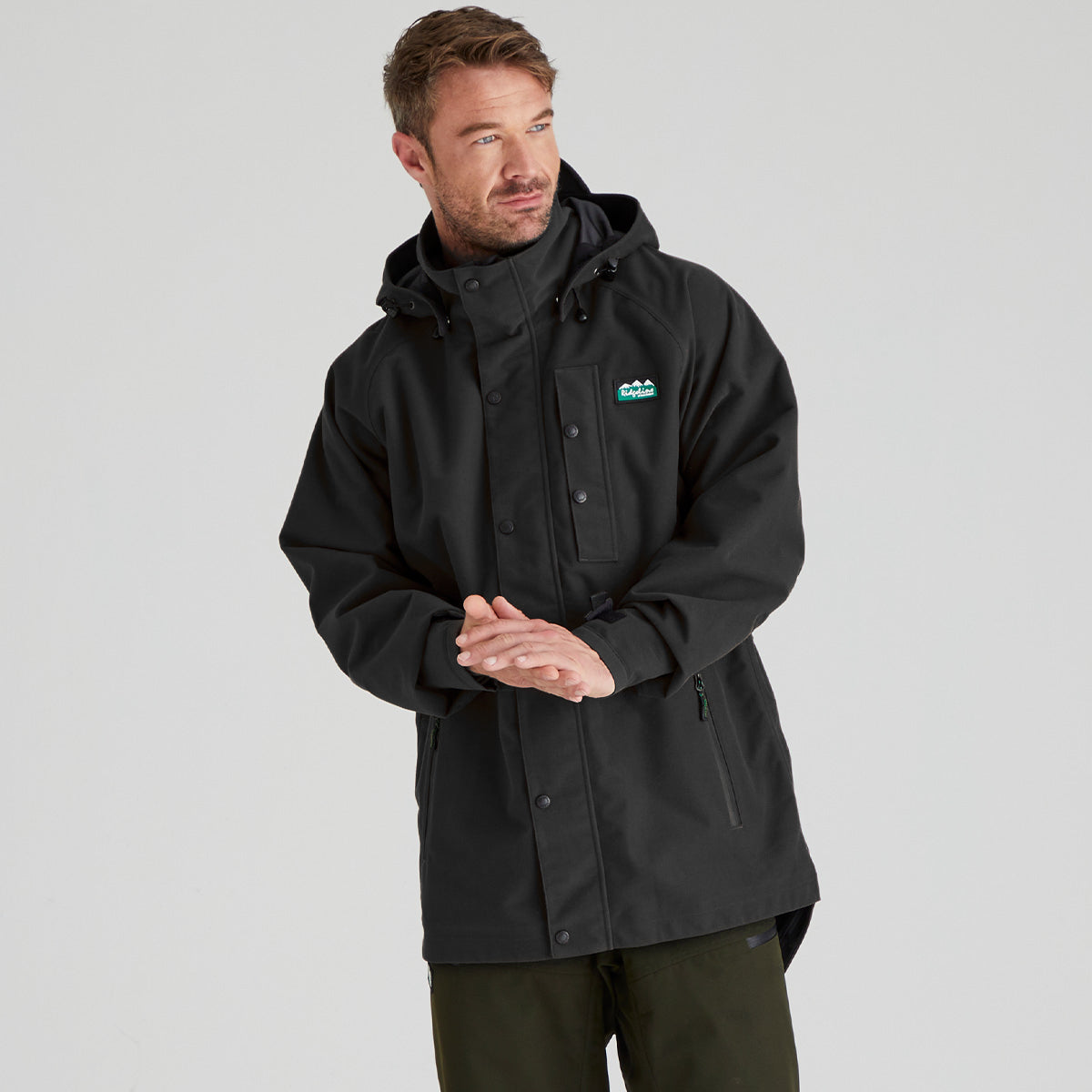
One thing she has noticed is that people often turn up wearing the same coat as her – a Ridgeline Monsoon Jacket. “I’ve had my jacket for years, and one of the reasons I love it is because it has a pocket on the front for my ball of string,” says Jenny. “I pop it in there and I run the string up and around my shoulders, down my arm and between my fingers, so it’s there while I’m pruning.”
“I love it when people turn up with the coat and the string set up. But I half wonder if I should be asking for commission,” she says.
The coat she says also keeps her warm and dry and protected against the roses. “I love pruning roses. I garden throughout the year just so I can prune,” says Jenny. “Although sometimes I wish I could have chosen something that needed doing during the warmer weather. And which didn’t involve getting stabbed by thorns and having your hands ripped to shreds. But at least I get to enjoy the result of my labour in the spring and summer, when they flower.”