
Article: The Eggs Factor
The Eggs Factor
What’s it like being in charge of 32,000 hens? Farmer Ryan Dakin gave us a tour of his family farm and explained why he switched from dairy to hens.

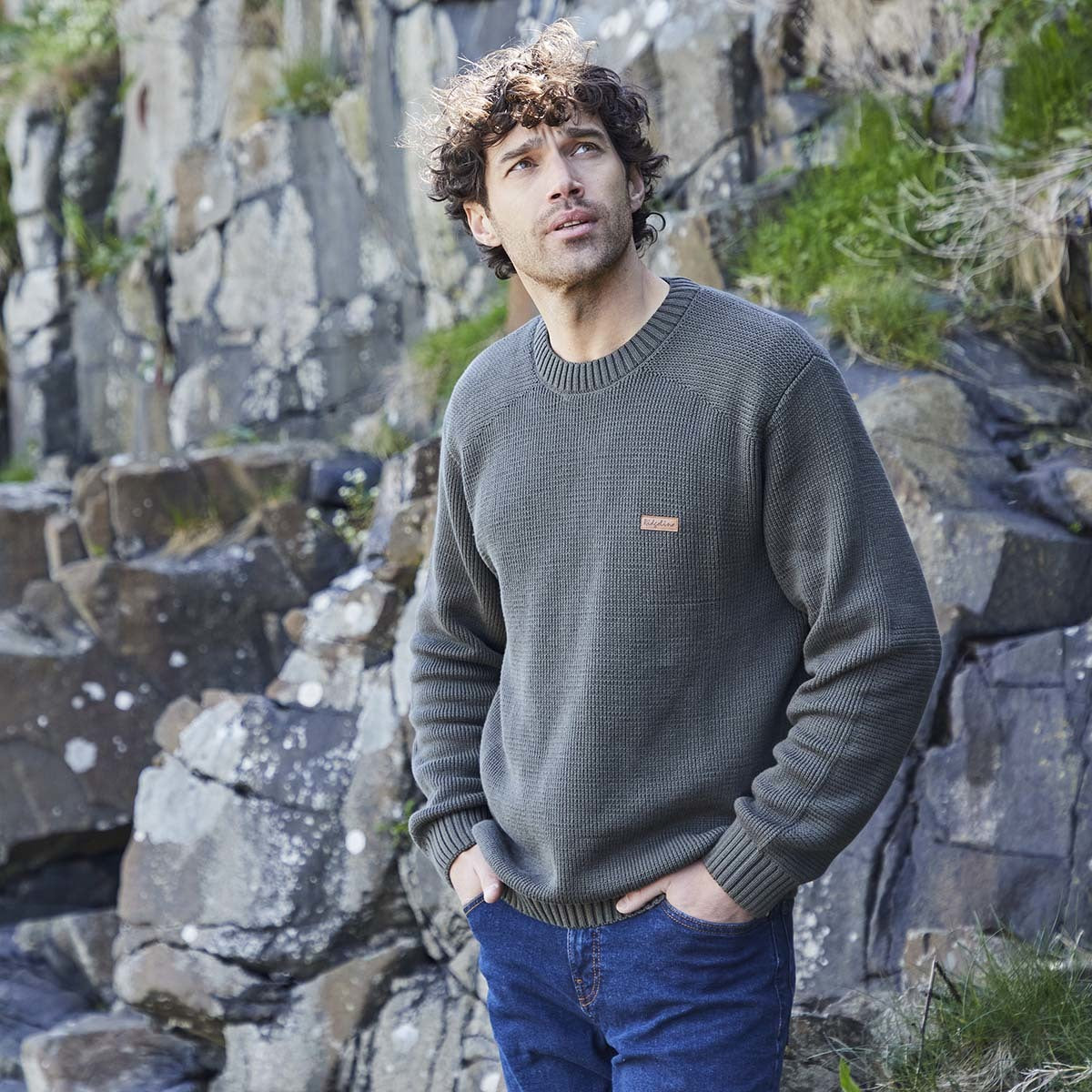
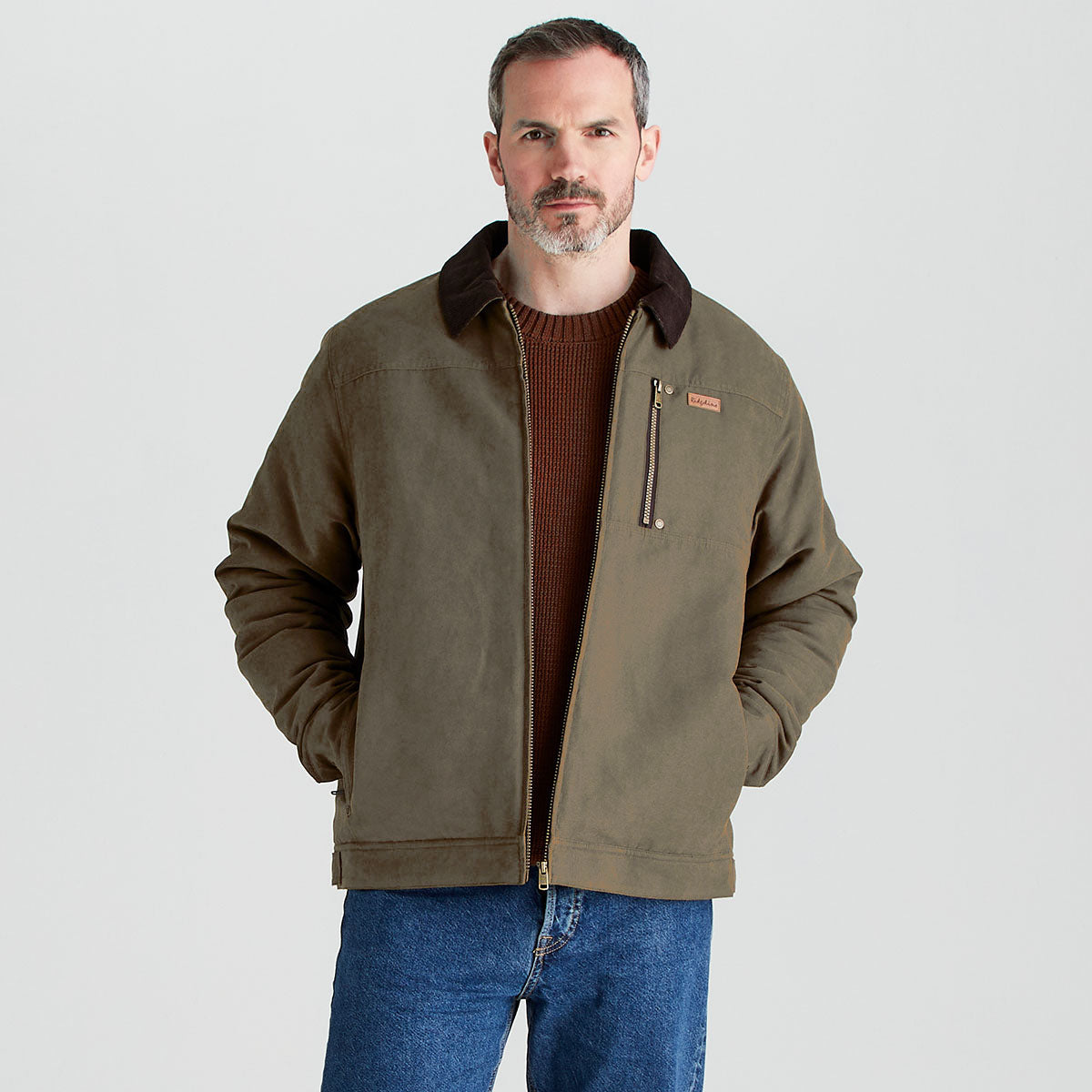
Ryan in his Kodiak Fleece Smock in Smokey Olive.
Words by Molly Haynes
In the heart of the Cheshire countryside, alongside a beef herd and a friendly farm dog, live 32,000 free range happy hens. And the reason for their happiness is award- winning young farmer, Ryan Dakin. A fourth generation farmer, he was instrumental in transforming the farm from dairy cows to egg-laying hens. A decision he says he’s never looked back on. “Growing up I worked on the farm and learnt from my dad – I loved it. When I left school, I studied Agriculture with Business Management at Reaseheath College, gaining a first-class degree through Chester University. “While I was there, it opened my eyes to other areas of agriculture and how important it is to forward think and be confident to change,” he says. “This led to the idea of introducing poultry to our family farm.” Fast forward to now and Ryan runs the poultry business supported by his parents. His dad also looks after the beef herd and grass crops, which they bale and sell. “Growing up I worked on the farm and learnt from my dad – I loved it."
The hens’ state-of-the-art home sits a short walk from the farmhouse and has all the mod cons a bird could wish for. “They have shelter inside and out, toys, scratch areas, and access to food and PH-balanced fresh water, which comes from a borehole and goes through our water treatment plant. All essential for optimum laying conditions,” explains Ryan. The hen house also contains the automated egg sorting and packing machine, which allows Ryan, his mum Julia and dad David to process the 30,000 eggs a day that come rolling out via a conveyor belt. They’re then checked and graded, with the less perfect ones kept separately and sold for use in quiches or other egg-based food items. “When the hens are young, we expect few second grade eggs. But, as they get older, the second grade eggs increase. We introduce things to the feed and water to enhance the shell quality,” explains Ryan. Once sorted, each egg is stamped with a unique number that shows it’s from Ryan’s farm. “Our eggs are called Chuckle Eggs and are sold by Morrisons,” says Ryan. “To qualify as a Chuckle Egg, there needs to be a minimum of 20% woodland in the hens’ range and at least one acre of wildflowers per 16,000 birds.” Ryan doesn’t know exactly where his eggs go. “But, if you open a box, it’s always interesting to see if they are your own, by checking out the egg code,” he says. While holding two hens, Ryan remembers his first morning being responsible for 32,000, 16-week-old birds. “I was excited, but I’d be lying if I said I wasn’t a bit nervous about how that first day would go.

Ryan in his Kodiak Fleece Smock in Smokey Olive.
But I soon learnt hens like routine. They wake up, have breakfast, lay an egg and then they’re free to come and go,” he says. “When it’s time for bed, they make their way back to their section, the hatches shut, and the lights gradually dim. “When the birds are young, bedtime is intensive as you have to make sure they’re all on their perches and teach the ones that aren’t what to do.” Hen welfare is something Ryan takes very seriously and he does regular walk throughs to check on them. “I worry about them as I’m in charge. When I started out, I had no idea how I’d spot a poorly hen with so many. But you just know when something’s not quite right. However, we vaccinate our hens every six months, and always prioritise their health and welfare.” Ryan has a support network of experts to call on for advice though, thanks to his role as a regional board member on the NFU Poultry Board. “I first got involved when I was awarded a place on the NFU Poultry Industry Program in 2022, where we learnt everything about the industry from management to media. Everyone was so knowledgeable and helpful.

“Once the program finished, I stayed involved because I like being part of the industry and at the forefront of what’s happening nationwide, not just on my farm.” Then last year, Ryan had recognition of the good job he’s doing when he won the British Free Range Egg Producers Association Young Producer of the Year. “It was nice to get confirmation that I’m doing something well… and for my parents, too. They trusted me to change everything on the farm, and it’s paid off.” As we sit chatting at a table topped with two metal hens, I ask Ryan what he’d be if he wasn’t a farmer.
“Probably a zoo keeper,” he laughs. ‘It would have to be something with animals. But I love being a farmer, even with the stress and the endless to-do list. I hope we’ll continue to grow and build our successful business providing great produce for the British public.”