

Heavy Metal
On his family’s former farm in Leicestershire, Joe Hewes and his team rescue old military machines, rebuild them for fun and YouTube, and keep their history rumbling on.
Words by Molly Haynes

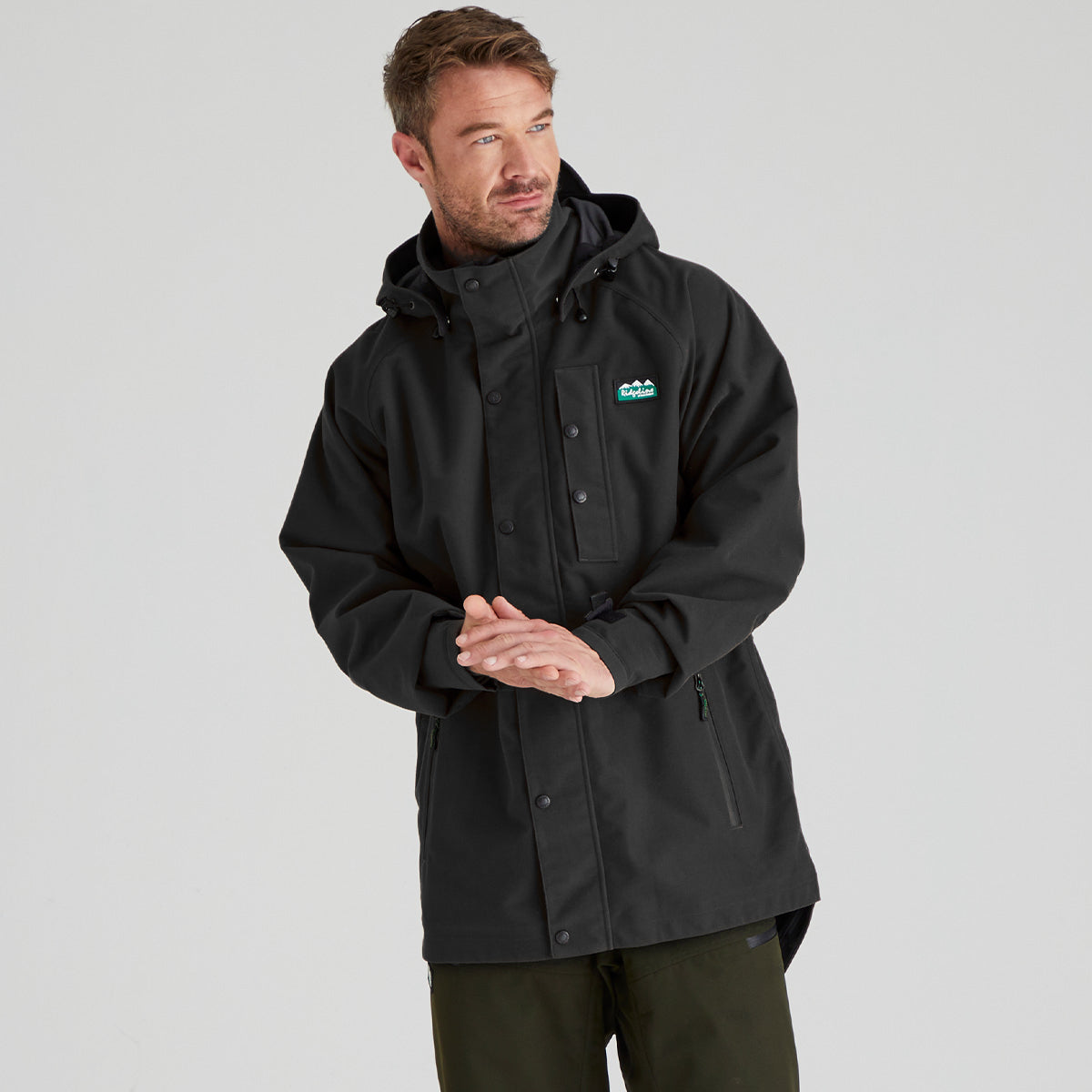
(Above) Joe Hewes works to rescue and restore old military machines. Joe wears his Ridgeline Men's Torrent Jacket in Deep Forest.
It’s been a busy week for self‑taught tank specialist and YouTube star Joe Hewes and his team, Jack and Seb. One that saw them wondering if the amphibious vehicle they’d just collected was about to sink in the lake they’d chosen to test‑drive it in.
“That was a bit of a scary moment,” says Joe. “We’d picked it up that day with a view to renovating it for the family whose elderly relative had owned it. Sinking it was not part of the plan.”
Joe grew up on a farm in the Leicestershire countryside but admits he was always happiest when the tractor broke down, because it meant he and his dad could fix it. “I was never interested in being a farmer,” he says. “I wanted to take things to pieces and put them back together again.”
From shed to subscribers
When he was old enough, and with a loan from his mum, Joe bought his first tank to fix up. What began as a teenage hobby squeezed into evenings and weekends around a full‑time job has become a successful YouTube channel with nearly half a million subscribers. But Joe is still reluctant to call himself a tank expert.
“In the early days, we’d get a lot of criticism from tank enthusiasts telling us what we were doing wrong,” he says. “But it’s like anything you do for a long time – you get better at it. And now I’m pretty good at fixing tanks. I’m also the person people call when the 55‑ton problem in the hedgerow needs to be solved.” He isn’t joking. His skills are in demand, not just because he brings these vehicles back to life, but because he often does it for no charge. “People come to us with a vehicle they know of, or maybe someone’s died and they want to see it moved on. But moving a massive hunk of metal can cost thousands of pounds,” he explains. “We’ll often recover the vehicle for free, fix it and help the owner find a buyer for it. I like being able to help people, and I know the YouTube video will help cover the costs.”
When tanks went civilian
Many of those calls mean a large assortment of military vehicles end up at the farm Joe’s grandfather bought in the 1950s after the 319th US airborne artillery was stationed there during the Second World War. No longer a working farm since Joe’s dad retired, the same stables that once housed soldiers now house his tanks.
Joe also has the British Army to thank for many of the tanks that come his way. In the early 1990s, as they upgraded from the Chieftain to the Challenger, they sold off around 1,600 models, some for as little as £10,000. Many were snapped up by farmers, who had the land to keep them.
“They were cheap, a bit of fun, maybe a business venture,” Joe says. “But once they broke and people realised what it cost to move or fix them, a lot were left to rot – until we get a call to come and rescue them.”
It wasn’t the first time farmers had taken a shine to tanks. After the Second World War, surplus armour was cheap and more powerful than the tractors of the day, so some tanks were converted into tractors. Being a farmer’s son himself, Joe decided to recreate that history with one of his own tanks, fitting it with a rear linkage and using it to plough a field.
“We didn’t know if it was actually going to work,” he says. “But it did, and that video got 100 million views on Facebook and nearly a million on YouTube, which is good for our channel.”

Joe works alongside Jack Westaway restoring machines of all sizes. Joe wears his Ridgeline Men's Torrent Jacket in Deep Forest while Jack wears his Ridgeline Men's Kodiak Smock in Smokey Olive.
Tanks with a tale
For Joe, it’s often not the tank that catches his eye, it’s the story behind it. “Each tank has its own registration that’ll tell you what regiment it was in, when it was last in service and when it was disposed of, and I love finding that stuff out,” he explains.
Only one of his tanks has what he calls “credible war history” – a Chieftain that served in the Gulf War in the early nineties. “We actually got in touch with some of the crew who had been in it during that time,” says Joe. “It was fascinating to learn more about its history, but the soldiers on board experienced horrific things.”
For someone who plays with tanks every day, Joe is keen to point out he’s very anti‑war. “I try not to think of a tank as a weapon and instead see it as a feat of engineering,” he says. “The tank has come full circle. It revolutionised the battlefield in World War One and now it’s just a giant target and quite pointless, because you don’t need occupants in them anymore. They can just be drones.”
A tanking community
The joy for him comes from bringing the vehicles back to life – driving them, testing them, pushing them to the limit. “There’s no joy from a tank that’s just sitting in a shed,” he says. “They mean nothing to me like that. It’s when we’re all enjoying them together that they become invaluable.”
The audience, too, has become part of that circle. Alongside the odd jealous comment, Joe regularly gets messages from people watching in hospital or at home during chemo, saying the videos give them something to laugh at in a dark time. It still surprises him that a farm in Leicestershire and an old war machine can have that effect. But he’s clearly chuffed, too.
“There’s no award for being the most grown‑up person in the room, is there?” he says. “Really, I think it’s whoever enjoys themselves the most who’s the real winner.”